
Hiring Moving Companies vs. Moving Containers
The Hidden Risks of PODS, Moving Containers & Portable Storage
Portable moving containers have become increasingly popular over the last several years as more consumers look for flexible and budget-friendly moving options. Companies advertise these services as:
- affordable
- convenient
- flexible
- simple DIY moving solutions
At first glance, moving containers may seem like the perfect alternative to hiring a professional moving company. The idea of packing at your own pace and storing your belongings temporarily sounds appealing to many families.
However, before choosing a moving container instead of professional movers, it’s important to understand the real risks involved — especially if you own:
- quality furniture
- antiques
- artwork
- electronics
- designer pieces
- heirlooms
- high-end household items
Many customers don’t realize the downsides of portable storage containers until their belongings arrive damaged, dirty, overheated, or exposed to moisture.
If you’re researching:
- moving company vs PODS
- moving containers vs movers
- are PODS safe?
- are moving containers climate controlled?
- container moving pros and cons
here are some of the most important things consumers should understand before making a decision.
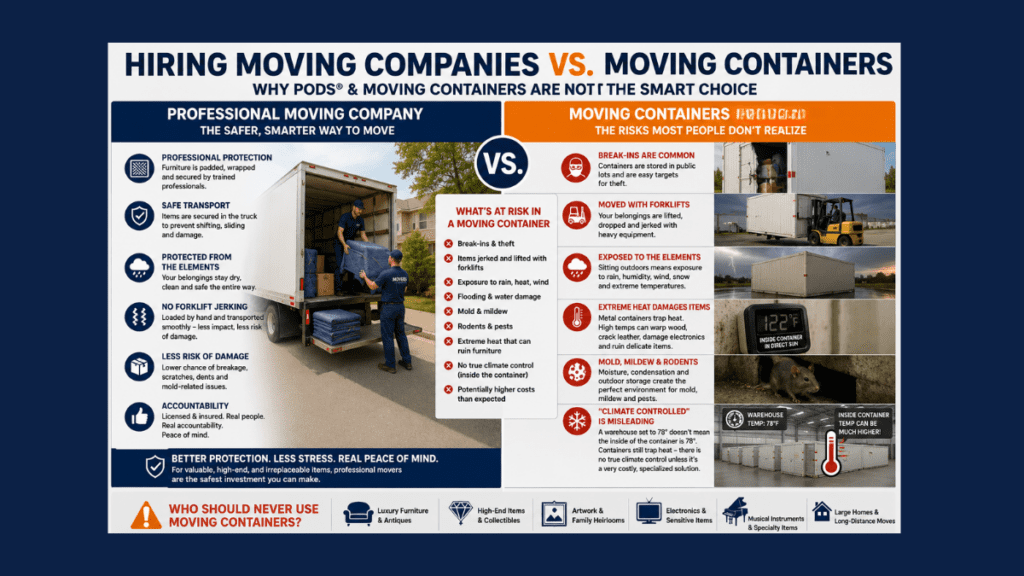
The Biggest Problem With Moving Containers:
Your Items Are Usually Not Professionally Protected
One of the biggest differences between hiring professional movers and using a portable storage container is the level of protection your furniture and belongings receive.
When hiring experienced movers, furniture is typically:
- padded with moving blankets
- professionally shrink wrapped
- secured tightly inside the truck
- strapped to prevent shifting
- loaded using weight-balancing techniques
Professional moving and storage companies are trained to protect fragile and valuable items during transportation.
With moving containers, most customers are responsible for packing and loading everything themselves. Unfortunately, most people do not have access to:
- commercial furniture pads
- professional shrink wrap
- loading straps
- proper stacking methods
- weight distribution experience
As the container moves during transportation, items inside can:
- slide
- shift
- bounce
- collapse
- rub against one another
especially during long-distance transportation or rough road conditions.Even well-packed containers can experience movement and damage if the load is not balanced correctly.
Moving Containers Are Frequently Moved With Forklifts
This is one of the least discussed risks associated with portable moving containers.
Many consumers imagine their container simply sitting securely on a truck until delivery. In reality, containers are often:
- lifted
- repositioned
- stacked
- transferred
- moved repeatedly
using forklifts and heavy equipment.
Every time a container is picked up or lowered, your belongings may experience:
- sudden jerking
- vibrations
- impact shifting
- uneven lifting angles
- hard stops
Even if your furniture was carefully packed, repeated forklift handling can still lead to:
- cracked furniture
- loosened joints
- broken glass
- damaged electronics
- crushed boxes
- scratched surfaces
Professional moving trucks generally involve far less repeated lifting and repositioning of your household goods.
Weather & Environmental Exposure Is a Major Risk
One of the biggest differences between professional moving trucks and portable storage containers is environmental exposure.
Many moving containers are stored:
- outdoors
- in industrial yards
- on gravel lots
- in open storage facilities
- exposed to changing weather conditions
Unlike professionally operated moving trucks that are actively transporting your items, containers may sit for days or weeks exposed to:
- rain
- humidity
- direct sunlight
- temperature swings
- snow
- wind
This exposure creates significant risks for furniture and household items.
Flooding, Moisture & Water Damage Risks
Portable containers can be vulnerable to:
- heavy rain
- leaking seals
- standing water
- flooding
- condensation buildup
Even small amounts of moisture can cause serious damage over time. There are thousands of reviews regarding moving containers that have allowed moisture and lead to mold. The additional coverage offered does not cover damages related to mold.
Water intrusion may lead to:
- warped wood furniture
- ruined upholstery
- mold growth
- mattress damage
- swollen particle board
- peeling veneers
- deteriorated cardboard boxes
Many customers do not realize there is moisture inside the container until they unload their belongings weeks later.
Extreme Heat Can Ruin Furniture & Electronics
This is especially important for moves involving:
- Florida
- Texas
- Arizona
- Nevada
- Southern California
- humid summer climates
Metal moving containers sitting in direct sunlight can become dramatically hotter inside than the outside temperature.
That heat buildup can damage:
- leather furniture
- wood furniture
- vinyl materials
- electronics
- candles
- artwork
- musical instruments
- antiques
- collectibles
Extreme heat and humidity can also weaken glue, warp materials, crack finishes, and permanently damage sensitive items.
“Climate Controlled” Containers Are Often Misunderstood
Many consumers assume that “climate controlled storage” means the actual moving container itself is temperature regulated.
In many situations, that is not entirely accurate.
Some companies store containers inside larger warehouses that may be temperature controlled. However, the INSIDE of the metal container can still become significantly hotter than the warehouse temperature itself.
For example:
A warehouse may be maintained at:
Climate Controlled Storage is 80 Degrees
But inside a sealed metal container, temperatures may still rise dramatically due to trapped heat and poor airflow.
There is a major difference between:
- a climate-controlled warehouse
and - a truly climate-controlled transport container
True temperature-controlled moving systems do exist, but they are typically:
- specialty services
- very expensive
- used for luxury transport
- used for fine art or medical equipment
- designed for high-value shipments
Most standard portable moving containers are NOT individually temperature regulated. Even if they say they do, the containers are usually put in a large warehouse which is approximately 80 degrees but inside the container even at climate controlled can reach over 120 degrees.
Rodents, Pests & Storage Issues
Another overlooked issue with outdoor container storage is exposure to:
- rodents
- insects
- moisture pests
Containers stored outdoors or in industrial lots may attract:
- mice
- rats
- roaches
- ants
especially if:
- containers sit long-term
- food residue exists
- seals weaken over time
- moisture accumulates
Pest damage can destroy:
- mattresses
- upholstered furniture
- clothing
- paper goods
- stored boxes
This becomes more common the longer containers remain in storage.
Moving Containers Are Not Always Cheaper
Many consumers assume portable containers are dramatically less expensive than professional movers. However, additional costs can add up quickly.
Hidden costs often include:
- loading labor
- unloading labor
- storage extensions
- delivery fees
- parking permits
- packing materials
- damaged item replacement
- inaccessible delivery charges
For larger homes or interstate moves, hiring professional movers may provide:
- better protection
- less stress
- faster delivery
- lower damage risk
- more accountability
for a similar overall cost.
When Hiring Professional Movers Makes More Sense
Professional moving companies are often the better option for:
- luxury homes
- designer furniture
- antiques
- large family households
- interstate relocations
- white glove moves
- electronics
- artwork
- specialty items
- long distance moving
Professional movers typically provide:
- trained crews
- commercial equipment
- furniture protection
- proper loading techniques
- secure transportation
- accountability and insurance options
that portable container services simply cannot match.
Moving Container Company Near Me
Moving containers can work for certain situations, especially:
- small local moves
- temporary storage
- minimal furniture
- budget-focused relocations
However, consumers should fully understand the risks before assuming moving containers are safer, cheaper, or better for valuable household items.
For high-end furniture, sensitive items, or long-distance relocations, professional moving companies often provide:
- better protection
- better transport security
- reduced environmental exposure
- more reliable handling
- lower overall damage risk
Before choosing any moving option, always ask:
- how items are protected
- how containers are stored
- how transportation works
- what “climate controlled” actually means
- what happens if belongings are damaged
Saving money upfront may not be worth it if your furniture, mattresses, electronics, or valuable household items are exposed to heat, moisture, shifting, or long-term storage damage during the move. Learn how to save money on moving.