









How Much Does It Cost to Move in 2026?
Moving costs in 2026 vary widely depending on distance, home size, services, and market conditions. While some local moves may cost a few hundred dollars, long-distance relocations can reach several thousand.
Understanding what goes into a moving quote is the best way to budget accurately and avoid surprises.
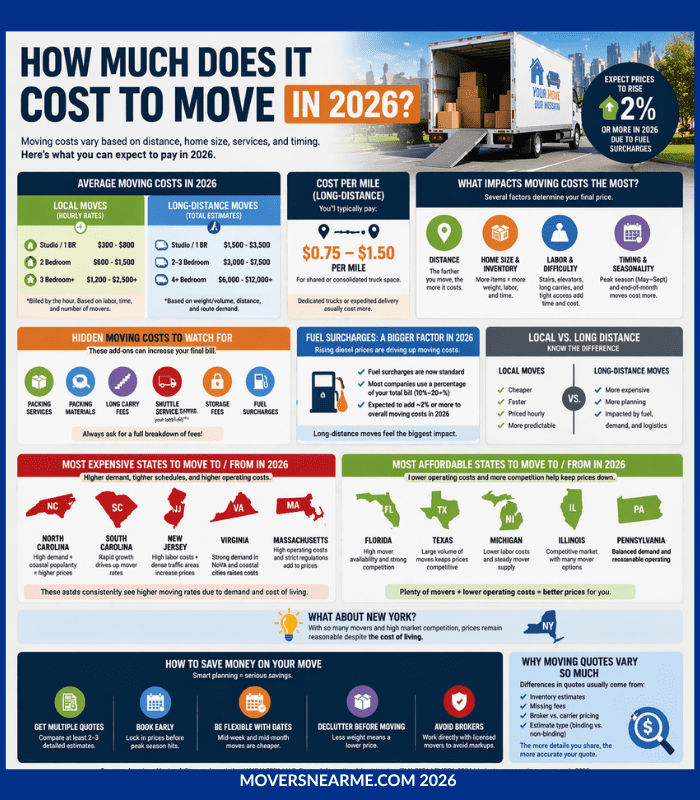
Average Moving Costs in 2026
While every move is different, here are general ranges customers can expect:
Local Moving Costs (Hourly)
- Studio / 1 Bedroom: $300 – $800
- 2 Bedroom: $600 – $1,500
- 3 Bedroom+: $1,200 – $2,500+
Local moves are typically priced based on:
- Hourly labor
- Number of movers
- Travel time
Find out more about local movers.
Long Distance Moving Costs
- Studio / 1 Bedroom: $1,500 – $3,500
- 2–3 Bedroom: $3,000 – $7,500
- 4+ Bedroom: $6,000 – $12,000+
Long-distance pricing is usually based on:
- Weight or volume
- Distance (mileage)
- Fuel and route demand
Find out more about long distance movers.
Cost Per Mile Breakdown
For long-distance moves, pricing often follows a per-mile structure.
General Estimates:
- $0.75 – $1.50 per mile (shared truck / consolidated)
- Higher for dedicated trucks or expedited delivery
The farther you move, the more fuel, labor, and logistics impact your price. Learn more about average moving costs.
What Impacts Moving Costs the Most
Moving costs are not random—there are specific factors that drive pricing.
Distance
The biggest cost driver. Longer moves require more fuel, labor, and planning.
Home Size and Inventory
More items = more weight, more labor, more time.
Accurate inventories are critical to getting a reliable quote.
Labor and Difficulty
- Stairs
- Elevators
- Long carries
- Tight access
All increase time and cost.
Timing and Seasonality
Prices are typically higher:
- May through September
- End of the month
- Weekends
Lower pricing is often available:
- Mid-month
- Winter months
- Flexible dates
Hidden Moving Costs to Watch For
Many customers underestimate the impact of additional charges.
Common add-ons include:
- Packing services
- Packing materials
- Long carry fees
- Shuttle service (if truck can’t access location)
- Storage fees
- Fuel surcharges
Always ask for a full breakdown.
Fuel Surcharges Are Increasing Costs
In 2026, fuel is playing a larger role than ever.
- Diesel prices are rising
- Moving companies are adding or increasing fuel surcharges
- Costs are expected to increase ~2% or more due to fuel alone
This especially impacts long-distance moves. Find out more about how gas prices are increasing moving costs in 2026
Local vs Long Distance: Which Is More Expensive?
Local moves are typically:
- Cheaper
- Faster
- More predictable
Long-distance moves:
- Cost significantly more
- Require more planning
- Are impacted by fuel, logistics, and demand
Cheapest vs Most Expensive States to Move
More Expensive:
More Affordable:
Costs vary based on:
- Labor rates
- Demand
- Distance between major cities
How to Save Money on Your Move
Get Multiple Quotes
Always compare at least 2–3 estimates.
Book Early
Locking in pricing early helps avoid seasonal increases.
Be Flexible With Dates
Mid-week and mid-month moves are often cheaper.
Declutter Before Moving
Less weight = lower cost.
Avoid Brokers
Work directly with licensed, verified movers to prevent pricing surprises. Learn more about avoiding moving scams.
Why Moving Quotes Vary So Much
Two quotes for the same move can differ by thousands.
This is usually due to:
- Inventory differences
- Missing fees
- Broker vs carrier pricing
- Estimate type (binding vs non-binding)
Understanding this helps you compare quotes accurately. Download our moving inventory checklist.
Movers Near Me 2026
The cost to move in 2026 depends on many variables, but one thing is clear—prices are becoming more dynamic due to fuel, demand, and market conditions. Find out why moving quotes are so different.
The best way to stay in control is to:
- Understand moving company pricing factors
- Compare detailed quotes
- Work with transparent, verified movers