

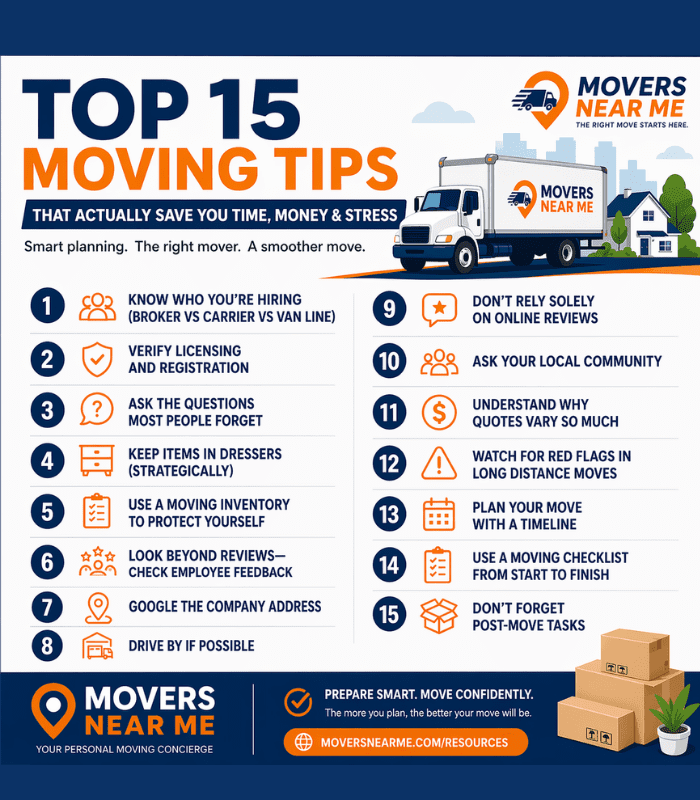
Top 15 Moving Tips That Actually Save You Time, Money & Stress
Moving isn’t just about boxes and trucks—it’s about making the right decisions before anything even gets scheduled. Most problems during a move come from poor planning, unclear expectations, or hiring the wrong company. The tips below are based on real industry experience and are designed to help you avoid costly mistakes and move with confidence.
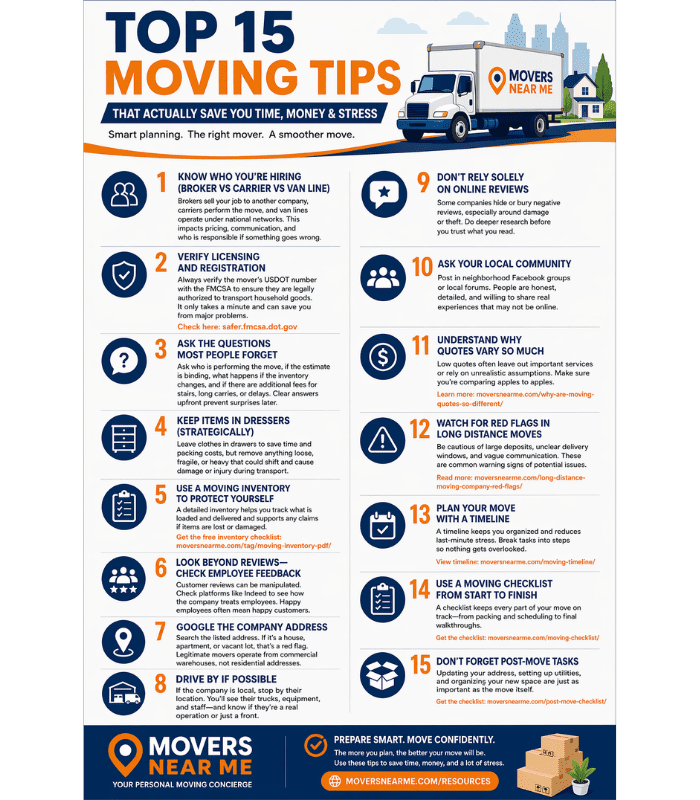
1. Know Who You’re Hiring (Broker vs Carrier vs Van Line)
Before booking a move, it’s critical to understand who you’re actually hiring. Brokers sell your job to another company, carriers perform the move, and van lines operate under larger national networks with local agents. This distinction directly impacts pricing, communication, and who is responsible if something goes wrong.
2. Verify Licensing and Registration
Always verify that your moving company is properly registered with the FMCSA and has a valid USDOT number. This ensures they are legally authorized to transport household goods, especially for interstate moves. Taking a minute to check this can protect you from unlicensed or fraudulent operators.
You can verify a company here:
https://safer.fmcsa.dot.gov/CompanySnapshot.aspx
PRO TIP: If the company has 0, 1 trucks listed on the DOT it is a broker.
3. Ask the Questions Most People Forget
Price should never be the only factor when choosing a mover. You need to understand who is performing the move, whether your estimate is binding, and what additional charges could apply. Asking the right questions upfront will eliminate surprises and give you a much clearer picture of how the company operates.
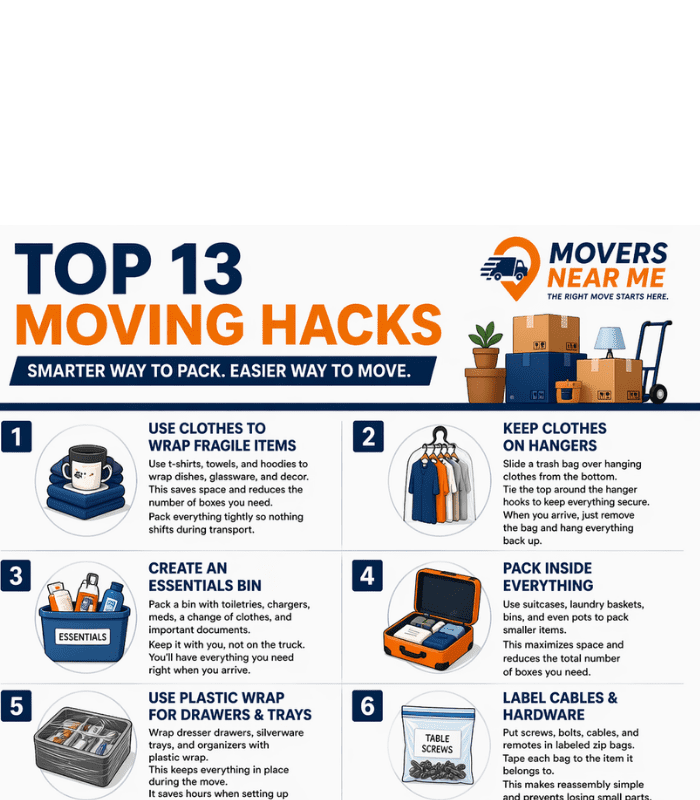
4. Keep Items in Dressers (Strategically)
Leaving clothes in dressers can save time and reduce packing costs if done correctly. However, you should remove anything loose, fragile, or heavy that could shift and cause damage during transport. Keeping drawers light and organized helps movers handle furniture safely and efficiently.
5. Use a Moving Inventory to Protect Yourself
Creating a detailed inventory of your belongings is one of the best ways to stay organized and protect yourself during a move. It allows you to track what is loaded and delivered, and it provides documentation in case anything is lost or damaged. This becomes especially important for long-distance moves or higher-value shipments.
Use a printable inventory here:
https://moversnearme.com/tag/moving-inventory-pdf/
6. Look Beyond Reviews—Check Employee Feedback
Customer reviews can be misleading or manipulated, especially in the moving industry. Looking at employee reviews on platforms like Indeed can give you better insight into how a company actually operates. Companies that treat their employees well are far more likely to deliver a professional and consistent moving experience.
7. Google the Company Address
Take a moment to search the company’s listed address before booking. If the location appears to be a house, apartment, or empty lot, it may indicate the company does not have a real operating facility. Legitimate movers typically operate from commercial warehouses with trucks, staff, and visible infrastructure.
8. Drive By If Possible
If the company is local, consider stopping by their location in person. This gives you a firsthand look at their trucks, equipment, and overall operation. A quick visit can confirm whether the business is established and legitimate or something you should avoid.
9. Don’t Rely Solely on Online Reviews
Online reviews can be helpful, but they rarely tell the full story. Some companies actively suppress negative feedback or flood platforms with positive reviews. Doing additional research beyond review sites will help you make a more informed decision.
10. Ask Your Local Community
Local Facebook groups and neighborhood forums can be incredibly valuable when researching movers. People are often more honest and detailed when sharing experiences in community spaces. You may uncover insights that are not visible anywhere else online. In many cases, moving companies have infiltrated reddit with fake information so be wary of people that sound promotional on sites like this.
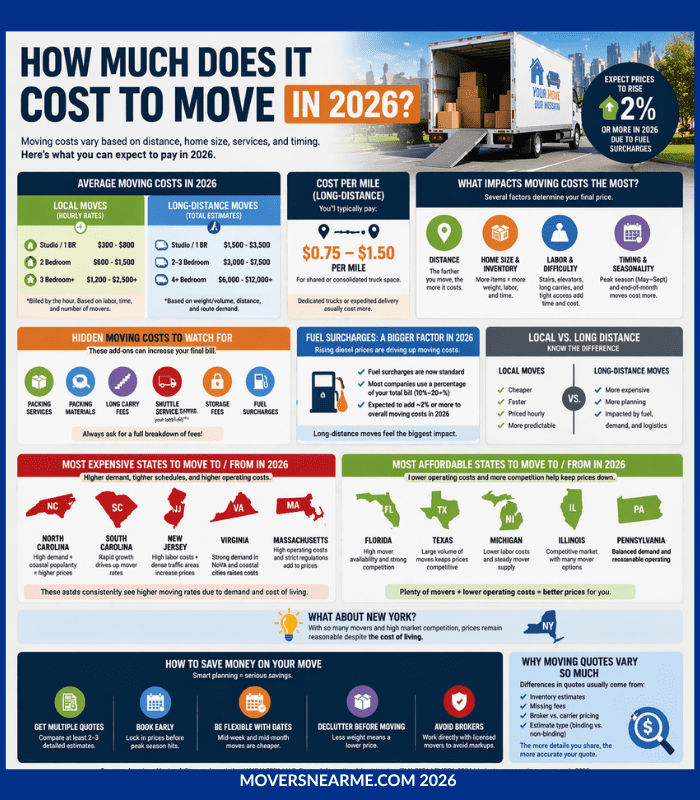
11. Understand Why Moving Quotes Vary So Much
Moving quotes can differ significantly, and there is almost always a reason. Lower estimates may leave out important services or rely on unrealistic assumptions about your move. Understanding what is included—and what is not—helps you compare quotes accurately and avoid unexpected costs.
Learn more here:
https://moversnearme.com/why-are-moving-quotes-so-different/
12. Watch for Red Flags in Long Distance Moves
Long-distance moves come with higher risks and more moving parts. Warning signs like large deposits, vague delivery windows, or unclear communication should never be ignored. Taking the time to identify these red flags can prevent major issues down the line.
Read more here:
https://moversnearme.com/long-distance-moving-company-red-flags/
13. Plan Your Move with a Timeline
A structured moving timeline helps you stay organized and reduces last-minute stress. Breaking tasks into manageable steps ensures nothing gets overlooked as your move date approaches. Planning ahead also gives you more flexibility and better control over scheduling.
View a full timeline here:
https://moversnearme.com/moving-timeline/
14. Use a Moving Checklist from Start to Finish
A comprehensive moving checklist keeps every part of your move on track. From packing and scheduling to final walkthroughs, it acts as a roadmap for the entire process. Having everything clearly outlined makes the experience much more manageable.
Access the checklist here:
https://moversnearme.com/moving-checklist/
15. Don’t Forget Post-Move Tasks
The move isn’t over once everything is unloaded. Updating your address, setting up utilities, and organizing your new space are just as important as the move itself. A post-move checklist ensures nothing falls through the cracks after you arrive.
Complete your move here:
https://moversnearme.com/post-move-checklist/
Final Thoughts
A successful move comes down to preparation, awareness, and making informed decisions. The more you understand the process, the easier it is to avoid common pitfalls and unnecessary stress. By following these tips, you can move smarter, protect your belongings, and have a much smoother overall experience.