









Moving Cost Calculator Breakdown
Moving quotes can feel inconsistent and confusing—especially when you receive multiple estimates that vary by thousands of dollars. However, pricing in the moving industry is not random. Every quote is built from a combination of measurable factors that directly influence the cost of your move. The key difference between a good estimate and a risky one is how thoroughly those factors are evaluated and explained.
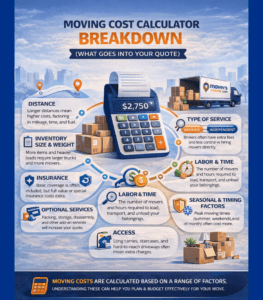
Understanding exactly what goes into your moving quote allows you to compare companies accurately, identify missing costs, and avoid unexpected charges on moving day. Whether you’re relocating locally or across the country, knowing how pricing works puts you in control of your budget.
Distance: The Foundation of Your Moving Cost
Distance is one of the most significant components of any moving quote, particularly for long-distance relocations. The farther your shipment needs to travel, the more resources are required to complete the move.
Long-distance pricing is typically calculated using a combination of total mileage, estimated fuel consumption, drive time, and federal transportation regulations that govern driver hours. Carriers must also account for route planning, tolls, and potential overnight stops. Even small increases in distance can impact the final price due to these layered logistics.
For local moves, distance still matters—but it is usually factored into travel time rather than a per-mile rate. Either way, distance serves as the foundation upon which most other costs are built. Learn more about long distance moving companies.
Inventory, Volume, and Weight
The size of your move—measured by inventory, volume, or weight—is another major pricing driver. Simply put, the more you move, the more it costs.
Every item you include increases the amount of space required on the truck and the overall shipment weight. Long-distance moves are often priced by weight or cubic feet, while local moves rely more on time and labor—but both are directly influenced by how much you have.
Accurate inventory is critical. If items are left off during the estimate process and later added on moving day, the cost will increase—sometimes significantly. This is one of the most common reasons customers experience price changes, so detailed and honest inventory lists are essential for a reliable quote. Download our moving inventory checklist.
Labor and Time Requirements
Labor is the primary cost factor for local moves and a major component of long-distance pricing as well. Moving companies calculate labor based on the number of movers required and the total time needed to complete the job.
Several factors can increase labor time, including stairs, elevators, long walking distances from the truck to your home, and difficult layouts or tight spaces. Homes with multiple levels or limited parking access often require additional effort, which directly impacts the number of hours billed.
The complexity of your move matters just as much as the size. A small apartment with poor access can take longer—and cost more—than a larger home with easy loading conditions.
Packing and Additional Services
Packing services and add-ons can significantly affect your final moving cost. While many customers choose to pack themselves, full-service packing provides convenience, efficiency, and added protection for fragile items.
Common additional services include full or partial packing, packing materials such as boxes and padding, furniture disassembly and reassembly, and specialty handling for items like pianos, safes, antiques, or artwork. Each of these services requires additional labor, materials, and expertise.
While these options increase the total price, they can also reduce risk, save time, and simplify the overall moving experience—especially for long-distance or complex relocations. Learn more about packing.
Insurance and Valuation Coverage
Every professional move includes some level of valuation coverage, but the type and level of protection can vary significantly.
Basic coverage, often referred to as Released Value Protection, is typically included at no additional cost but provides minimal reimbursement based on weight rather than actual value. For customers seeking greater protection, Full Value Protection or third-party insurance options are available at an additional cost.
Understanding what level of coverage is included in your estimate is essential. Many customers assume they are fully covered, only to realize later that their protection is limited. Reviewing these details upfront helps avoid costly surprises in the event of damage or loss. Learn more about moving insurance.
Fuel Surcharges and Transportation Costs
Fuel has become an increasingly important factor in moving costs, especially in 2026 where diesel price fluctuations continue to impact the transportation industry.
Many moving companies apply fuel surcharges that adjust based on current market rates, distance traveled, and route demand. These charges may not always be clearly outlined in lower-quality estimates, which can lead to unexpected increases later in the process.
In some cases, fuel alone can raise overall moving costs by 2% or more, particularly for long-distance relocations. Transparent companies will clearly explain how fuel is calculated and whether it is included in your quote.
Timing and Seasonality
When you choose to move can have a major impact on your final cost. The moving industry operates on supply and demand, with peak seasons driving higher prices due to limited availability.
The busiest—and most expensive—times to move typically include the summer months (May through September), weekends, and the beginning or end of the month when leases turn over. During these periods, demand is high and pricing reflects that.
On the other hand, moving during off-peak times—such as mid-month, weekdays, or winter months—can result in significantly lower costs. If your schedule is flexible, adjusting your move date is one of the easiest ways to save money.
Storage and Logistics
If your move requires storage, additional costs will apply based on the type and duration of storage services needed. Storage is commonly used when there is a gap between move-out and move-in dates or when downsizing requires temporary space.
Pricing depends on whether the storage is standard or climate-controlled, how long your items remain in storage, and how many times they need to be handled. Loading items into storage and then unloading them later effectively adds another step to the moving process, increasing both labor and cost.
While storage adds flexibility, it should be factored carefully into your overall budget.
Access and Location Challenges
Not all moves are created equal when it comes to accessibility. Physical and logistical challenges at either location can increase both time and cost.
Examples include long carries from the truck to your front door, the need for shuttle trucks when large moving vehicles cannot access the property, high-rise buildings with elevator restrictions, or tight urban environments with limited parking.
These challenges often require additional equipment, coordination, or labor, all of which contribute to a higher overall quote. A thorough on-site or virtual estimate should identify these factors in advance.
Why Moving Quotes Vary So Much
It’s common to receive multiple quotes for the same move that differ dramatically in price. In most cases, this is not because one company is simply “cheaper,” but because the estimates are built differently.
Lower quotes may be missing key services, based on incomplete inventories, or structured as non-binding estimates that can increase later. In other cases, pricing differences may come from whether you are working with a direct carrier or a broker, as well as the level of detail and transparency provided.
The most accurate quotes are typically the most detailed. If a price seems too good to be true, it often is. Find out why moving quotes are so different.
How to Use This Information
When reviewing your moving estimate, it’s important to go beyond the bottom-line price. Make sure every service is clearly listed, understand what is included versus optional, and ask about any potential additional charges that could arise.
Comparing quotes based on scope—not just price—ensures you are evaluating each company on equal footing. A slightly higher quote that is fully transparent is often a safer and more cost-effective choice in the long run.
Movers Near Me Quotes
A moving quote is much more than a single number—it is a detailed breakdown of labor, transportation, logistics, and services tailored to your specific situation.
By understanding how these components work together, you can compare estimates with confidence, avoid hidden costs, and choose a moving company that aligns with your expectations.
The more informed you are going into your move, the smoother, more predictable, and more affordable the entire experience will be.